Welcome to the Slavic Department!
First established as the Department of Slavonic Languages in 1915 and redesigned as the Department of East European Languages in 1935, the Department of Slavic Languages embarked on its present trajectory in 1946, when a grant from the Rockefeller Foundation permitted the establishment of the Russian (now Harriman) Institute. Consequently, it was necessary for the Department to expand its language offerings. At present, the Department offers five Slavic languages— Bosnian-Croatian-Serbian, Czech, Polish, Russian, and Ukrainian.
On our website, you can find out more about our faculty, our students, and our undergraduate and graduate offerings in Russian, Ukrainian, Czech, Polish, and Bosnian/Croatian/Serbian languages, literatures, and cultures. Check us out on Facebook.
**************************************************
The Department of Slavic Languages at Columbia University condemns Russia’s war against the sovereignty of Ukraine. We express our solidarity with Ukraine, its democratically-elected government, and with people everywhere who strive for freedom and peace. We honor Russian citizens who oppose this war. We call on the academic community to stand firmly against Russia’s military attacks on the Ukrainian state and its civilians. We express our sympathy and support for members of our community affected by this crisis.
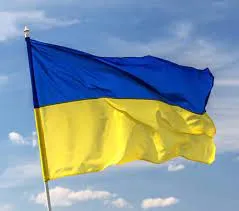
Learn Russian This Summer | Intensive Language Program at Columbia University
Learn Russian this summer at Columbia University through our intensive summer Russian language program. Designed for learners at all levels, this program offers beginner, intermediate, and advanced Russian courses taught by experienced instructors.
The program is open to high school students, undergraduate and graduate students, visiting students, and professionals from a wide range of backgrounds.
Program Highlights:
- Beginner, intermediate, and advanced levels
- Intensive language instruction
- June and July sessions
- Flat course rate per session
- Earn up to 8 semester credit hours
Whether you are starting Russian for the first time or advancing your proficiency, Columbia’s summer intensive program provides a rigorous and supportive learning experience at a world-class university.
Registration opens March 3
Learn more and apply: https://summer.sps.columbia.edu/academics/special-foreign-language-programs/russian-practicum
News
In a compelling new interpretation, this book locates the origins of modern Jewish literature within the turbulent events which reshaped Europe during the late eighteenth century: the partitions of Poland, the French Revolution, and the Napoleonic Wars. As Austria, Russia, and Prussia consolidated their rule over the Polish lands and banned most forms of political expression, literature became a central venue for reflecting on the new political order. Ofer Dynes argues that Jewish intellectuals turned to fiction—prose, poetry, and drama—to engage in political debates and make sense of new state…
Selected Publications
Владимир Шаров По ту сторону истории
Animal Farm (George Orwell)
Homo Scriptor